
-
- Advertisement
Make a small donation to Ye Olde Inn!
Every cent received goes toward Ye Olde Inn's maintenance and allows us to continue providing the best resources for HeroQuest and Fantasy Gaming fans.
Giant Space Wolves
Re: Giant Space Wolves
 by knightkrawler » May 12th, 2017, 2:49 pm
Feedback http://forum.yeoldeinn.com/viewtopic.php?f=38&t=3560
Gallery http://forum.yeoldeinn.com/viewtopic.php?f=56&t=1972&hilit=knightkrawler+gallery&start=200
____________________________________________________________________________________________________________
I've found a way of paying off old debts:
Always make more promises than you can break.


-

Cheese Baron
knightkrawler
The Furry Blue Derailer
Witch Lord
- Posts: 5825
- Images: 27
- Joined: May 25th, 2012, 2:26 pm
- Location: Regensburg, Germany
- Forum Language: English (United States)
- Hero:

- Evil Sorcerer: Morcar
- Usergroups:


Advertisement
Make a small donation to Ye Olde Inn!
Every cent received goes toward Ye Olde Inn's maintenance and allows us to continue providing the best resources for HeroQuest and Fantasy Gaming fans.
Re: Giant Space Wolves
by cornixt » May 12th, 2017, 4:39 pm
-

cornixt
Ogre
- Posts: 813
- Joined: November 4th, 2014, 12:56 pm
- Forum Language: British English
- Hero:

- Evil Sorcerer: Morcar
- Usergroups:
Re: Giant Space Wolves
by Goblin-King » May 12th, 2017, 5:40 pm
cornixt wrote:It's timeless. So many of the other models from that period look really dated.
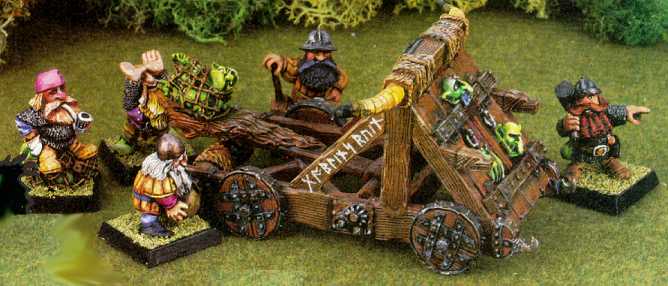
I rather like the "oldhammer" look. They had a charm I think is mostly lost in modern Warhammer Fantasy miniatures - Sorry, Age of Sigmar miniatures...

Classic warmachine
and modern warmachine
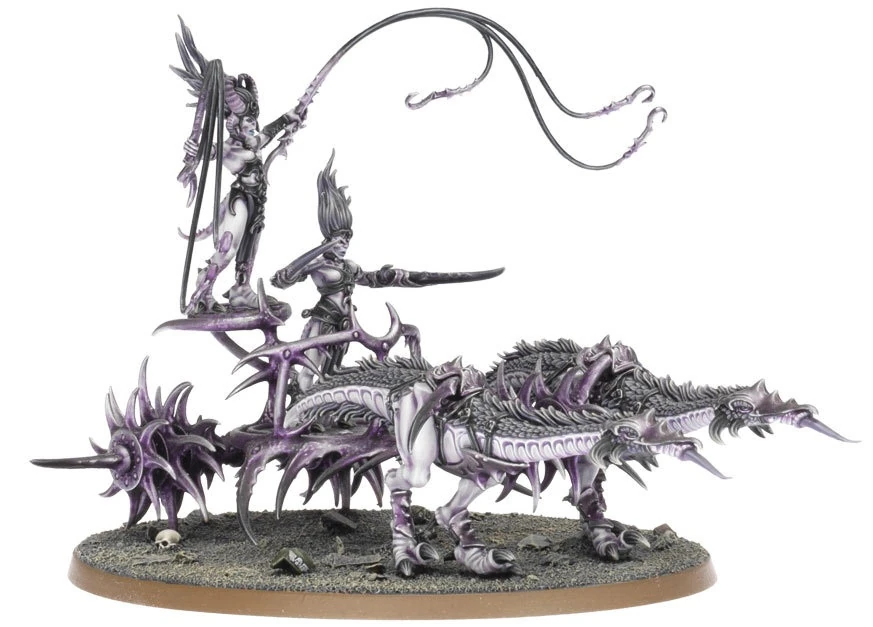
When did Games Workshop abandon "fun"?

-

Ye Olde Judge Dredd
Goblin-King
Really looks like David Bowie
Frozen Horror
- Posts: 3545
- Images: 85
- Joined: September 26th, 2011, 2:54 pm
- Location: Sønderholm, Denmark
- Forum Language: British English
- Hero:
- Evil Sorcerer: Morcar
- Usergroups:


Re: Giant Space Wolves
by Thor-in » May 12th, 2017, 6:09 pm
Goblin-King wrote:cornixt wrote:It's timeless. So many of the other models from that period look really dated.
I rather like the "oldhammer" look. They had a charm I think is mostly lost in modern Warhammer Fantasy miniatures - Sorry, Age of Sigmar miniatures...
Goblin-King, I would have to agree with you on that one. I also enjoy the older looking miniatures. I still have some Ralph Partha minis that have not been painted yet.
 "In The End We Are All Shadows and Dust"


-

Thor-in
Scout
- Posts: 1118
- Images: 8
- Joined: April 28th, 2014, 3:28 pm
- Location: New York State
- Forum Language: English (United States)
- Hero:
- Evil Sorcerer: Zargon
- Usergroups:
Re: Giant Space Wolves
by whitebeard » May 12th, 2017, 8:34 pm
I wanted OldHammer goblins and orcs to replace / enhance the HQ ones. The modern angular features look does not appeal to me at all. Turns out the HQ ones look great with a creative paint job and sufficiently diverse with just a few mods sprinkled in.

- whitebeard
Archmage
- Posts: 988
- Images: 0
- Joined: September 12th, 2014, 7:15 pm
- Forum Language: English (United States)
- Evil Sorcerer: Zargon
- Usergroups:
Re: Giant Space Wolves
by Anderas » May 13th, 2017, 12:24 am
Is there a quest needing him? Or do you just replace that 10 BP Ogre with it?
My Heroquest Game Cards
The Questimator
the font HQModern
StratosVX' updated Quest files
Our version of Heroscribe hosted by Stratos


-

Anderas
NOT Andreas!
Polar Warbear
- Posts: 3397
- Images: 73
- Joined: September 20th, 2014, 7:02 am
- Forum Language: British English
- Hero:

- Evil Sorcerer: Morcar
- Usergroups:
Re: Giant Space Wolves
by knightkrawler » May 13th, 2017, 1:43 am
that time only with stuff like Oldhammer, Otherworld, Metal Magic, Harlequin and so on.
That Stone Troll is one of only a few that is, as has been said, timeless, and would fit in both that Oldhammer company and the one I've been building with "modern" and "post-modern" minis over the last few years.
As for its size, one should try to put it on a 2x1 base.
Miniatures like that one are the reason why I went 40mm squares instead of stopping at 30 or 35mm.
I can now simply use 40mm bases and fill squares with very big monsters.
Ruleswise, I implement monster size differences like this:
The default base size for a figure used in HQ – Heroes & Villains is either 25 mm square or round or 30 mm/32 mm round. All these variants have a size that allows one such figure to occupy one square when you use boards or tiles as suggested in Readme. But there are ways to incorporate the use of figures that use different base sizes and thus different rules.
Generally, if multiple figures' bases fit in the same square, they can occupy it together, provided that the entire surfaces of all their bases fit completely within the confines of the square. All these figures are considered orthogonally adjacent to each other, even two figures of four that are in opposite corners of the square, which means they can all attack one of the other ones once per turn. This is important for base sizes smaller than the default size. All the figures in the same square are also adjacent to every square that is adjacent to theirs. For instance, if the Guildmage is adjacent to a square that contains four Goblins, all these Goblins can attack him on their individual turns.
There are also bigger base sizes, first among them the 40 mm size. Figures with this base size still fit normally into one square, provided you play on a 40 mm grid layout as recommended. The Push Back rule cannot be used on them.
If a figure's base is even bigger, then the figure occupies more than one square. To determine how many and which ones, squeeze the figure with its base edge against two perpendicular sides of one square and see which square sides the base overlaps. All the squares the base is in even with the smallest surface are occupied by that one figure. Yet, if another figure's base fits into such a square without overlapping any sides, then that figure may also occupy the same square the large figure does. Both figures are then considered orthogonally adjacent to each other.
To move a figure on a large base, you pick one of the squares it occupies as the part of the figure that moves, pulling the rest along, so to speak. You can turn the figure freely and there is no directional facing. All squares adjacent to any one square occupied by that figure are considered orthogonally adjacent to the figure. For a figure occupying two squares this means there are ten squares around it that it can attack or treat as orthogonally adjacent squares. For a figure occupying three squares it is twelve adjacent squares. For a figure occupying four squares (2x2 on the grid) it is twelve squares, for a figure occupying six squares (2x3 on the grid) it is fourteen squares. A figure may only move through a door if the door covers at least as many squares as the shorter side of the figure's base, which means that figures that cover more than three squares can only move through double doors.
Feedback http://forum.yeoldeinn.com/viewtopic.php?f=38&t=3560
Gallery http://forum.yeoldeinn.com/viewtopic.php?f=56&t=1972&hilit=knightkrawler+gallery&start=200
____________________________________________________________________________________________________________
I've found a way of paying off old debts:
Always make more promises than you can break.
-
Cheese Baron
knightkrawler
The Furry Blue Derailer
Witch Lord- Posts: 5825
- Images: 27
- Joined: May 25th, 2012, 2:26 pm
- Location: Regensburg, Germany
- Forum Language: English (United States)
- Hero:
- Evil Sorcerer: Morcar
- Usergroups:
Re: Giant Space Wolves
by Mistral » May 13th, 2017, 4:43 am
Goblin-King wrote:cornixt wrote:They still sell that Troll model. Probably one of the oldest figures in the current GW lineup, at least 25 years old.
Holy crap, you are right!
https://www.games-workshop.com/en-US/Warhammer?Nu=product.repositoryId&N=102351+2166398747&qty=12&sorting=rec&view=table&categoryId=cat440002a-flat
It's even still metal and not "finecast" like most other older models.
I ordered this one recently, maybe 1-2 months ago and was pleasantly surprised it was a big, metal, heavy guy!
The troll is used in the "official" Dwarf Quest "The Halls of Durrag-Dol", which was published in White dwarf and can be downloaded here in the "Quests" section, together with OFFICIAL (since GW published them in WD!) rules for skaven, rat ogres and a troll!
 Don't stop me now, I'm having such a good time. I'm having a ball!
-

Mistral
Zombie
- Posts: 30
- Joined: March 14th, 2017, 4:13 am
- Location: Belgium
- Forum Language: Nederlands
- Hero:
- Evil Sorcerer: Morcar
- Usergroups:
Re: Giant Space Wolves
by Anderas » May 13th, 2017, 8:10 am

I would change the stats of the troll perhaps. Nice to still fid things here!
My Heroquest Game Cards
The Questimator
the font HQModern
StratosVX' updated Quest files
Our version of Heroscribe hosted by Stratos
-
Anderas
NOT Andreas!
Polar Warbear- Posts: 3397
- Images: 73
- Joined: September 20th, 2014, 7:02 am
- Forum Language: British English
- Hero:
- Evil Sorcerer: Morcar
- Usergroups:
Re: Giant Space Wolves
by Goblin-King » May 13th, 2017, 9:23 am
Anderas wrote:Now I have seen it.
I would change the stats of the troll perhaps. Nice to still fid things here!
Yeah, that "official" troll is so freaking uninspired!

It's just a stupid Chaos Warrior.
And the Rat Ogre isn't much better. It's just a stupid Fimir.
Why didn't they give them some special rules? Or at least made them a bit tougher
Especially since there's only one of each.
-
Ye Olde Judge Dredd
Goblin-King
Really looks like David Bowie
Frozen Horror- Posts: 3545
- Images: 85
- Joined: September 26th, 2011, 2:54 pm
- Location: Sønderholm, Denmark
- Forum Language: British English
- Hero:
- Evil Sorcerer: Morcar
- Usergroups:
Return to General HeroQuest Discussion
Who is online
Users browsing this forum: Bing [Bot], Google [Bot] and 13 guests