have that evil smile, while
  have an under-bite with sharp lower teeth. Naturally, Games Workshop jumped on the D&D bandwagon in the early years, and over the years, they tried to set their fantasy world apart form D&D -- thus the creation of the
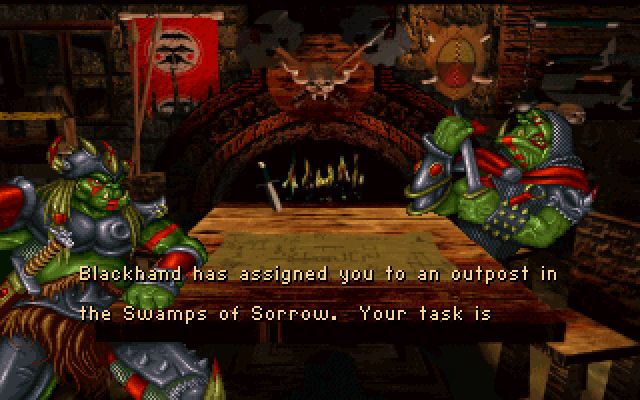
  . This seems to be the most popular representation of Orcs, Goblins, Hobgoblins, etc. from other mediums (cartoons, comic books, video games, other fantasy games and so on). I might be wrong, but I remember seeing early GM Orcs with an ugly tone of human-like flesh. It was likely a byproduct of their wilder early years, well before they really established their overall setting. To my knowledge, early hobgoblins had brown/orangish skin before they became green.
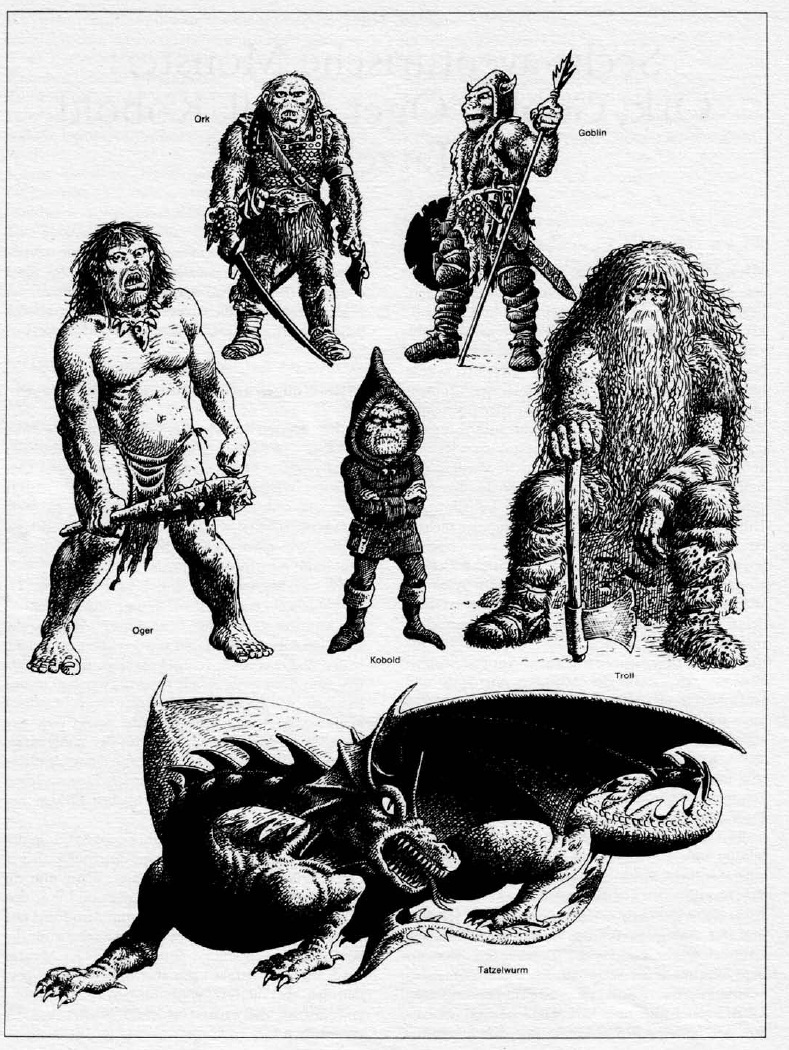
D&D Orcs on the other hand were always described as looking like pig-men: pointy ears, pug-noses, tusks, brownish skin with pinkish highlights, etc. Although, when Holmes Basic D&D hit the UK, the art was changed to show Orcs as cyclops people. That was an odd example, but it really highlights the liberties an artist can take with established elements on an open-ended fantasy. (Can you imagine if those Orcs got a foothold in the UK and become an iconic representation over there.) For the most part, Orcs are depicted as savage, but with fairly good (if unkempt) gear. Goblins seem to change form edition-to-edition, but are always shown as 4-foot tall humanoids. Hobgoblins are depicted as man-sized militants with good gear, and often with blue noses (for some reason). Bugbears are usually branched with goblinoids. Do to a mistake with a teenage artist in the early years of D&D, the first depiction of a Bugbear was a lanky, jack-O-lantern-headed creature (this has became popular with many OD&D Grognards). Later, they became hairy, bandy-legged brutes. The Gnoll was a signature D&D monster that could have looked really freakish given the fact that they are horrid hybrid of gnomes and trolls, but instead they have the heads of hyenas -- now they are just humanoid hyenas.
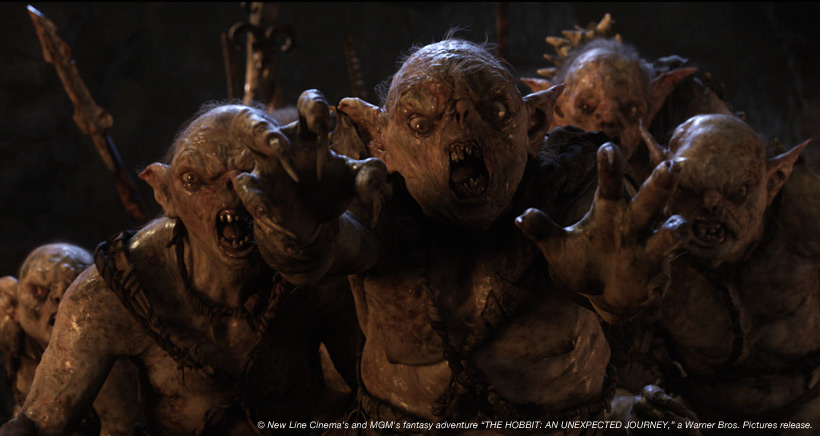
Of course the grandaddy of all Orcs/Goblins are from the pages of J.R.R. Tolkien. Their descriptions tend to fly off the map in places, but the commonly quoted line is "..they are (or were) squat, broad, flat-nosed, sallow-skinned, with wide mouths and slant eyes; in fact degraded and repulsive versions of the (to Europeans) least lovely Mongol-types." Art wise, the Hildebrandt Brothers were the most iconic visual representation of Middle Earth. Their vision of them range from fleshy and pig-like to green and lizard-like. Ever since the movies, people have been gravitating towards how they looked on film. The filmmakers added a lot of detail and diversity to how they all look, including elaborate back stories for each tribe and the types of gear they use.
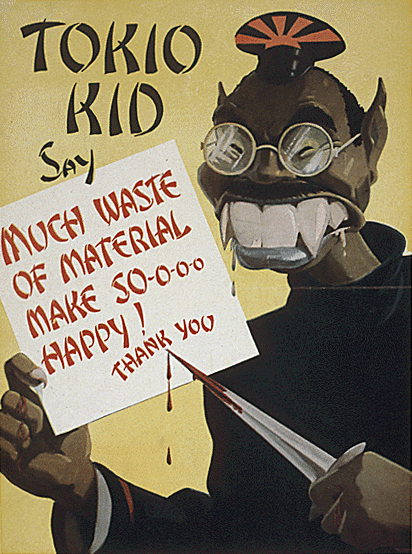
Whet it come to having an ugly evil race, everyone seems to have their own vision -- often in ways that reflect how we see other cultures, or the darker aspects of one's own culture. This is nothing new, as history is full of stories of larger-then-life heroes dealing with ugly savage sub-human people that threaten their way of life. They are usually built form old ideas of racism or xenophobia, but is also apart of human nature. They also serve as an easily recognizable enemy that are beyond redemption and can be killed or mistreated without the hero looking like an evil bastard. With cartoons, comics and video games, it is considered less violent to show the killing of inhuman monsters and if the blood is of an odd color like green (the asexual aspect form WH makes them even more family-friendly, as they have no family to morn for them). In a way, hostel space aliens have been used in the same fashion in sci-fi for years. Also, in old war propaganda.
What I'm getting at is what are your preferred look for Orcs, Goblins, Hobgoblins, etc.? Warhammer-ish? D&D-ish? Tolkien-ish? Or do you have another preference?











 They are dark lanky figures with clawed hands, Jack-O-Lantern-like heads, and burning eyes and mouths. They tend to make their eyes and mouth glow and not glow while moving around to claw or snatch people away, all the while whispering or laughing to taunt their victims. They are not treated as Goblinoids, as per the normal rules, but are evil undead spirits.


 )
)